Updated for couples planning their Iceland wedding in 2027
Yes, foreigners can legally get married in Iceland, even if neither person lives here. But before you start imagining your vows beside a waterfall or somewhere in the Icelandic mountains, there are a few legal requirements and documents you'll need to organise.
And if you're planning your wedding from another country, I know the paperwork can feel a little overwhelming.
What documents do you need?
When should you submit them?
Can you get married anywhere in Iceland?
And who can legally perform your ceremony?

I'm Lisa, an Iceland elopement photographer and experience designer based in Vík, South Iceland. I've helped international couples plan their wedding experiences here, from finding suitable ceremony locations to working around weather, travel logistics and officiant arrangements.
This guide explains the Iceland marriage requirements for foreigners, how the legal process works and what to consider when planning your wedding day.
I'll also show you where to find the official information, because legal requirements are something you should always confirm directly with the Icelandic authorities.
Can Foreigners Legally Get Married in Iceland?
Yes! You don't need to be an Icelandic citizen or permanent resident to get legally married in Iceland. Couples visiting from abroad can marry here, provided they meet Iceland's legal requirements and complete the necessary documentation.
Iceland also recognises same-sex marriage, so couples of any gender can legally marry under the same marriage framework.
The main requirements include:
Both partners must be at least 18 years old.
Both must be legally competent to marry.
Neither person can already be legally married to someone else.
Any previous marriage must have been legally ended.
The couple must not be within the prohibited family relationships defined by Icelandic law.
The necessary documents must be reviewed and approved before the marriage.
The wedding must be performed by someone legally authorised to conduct marriages in Iceland.
You don't need to organise a traditional wedding or invite guests to make your marriage official.
A small, intimate ceremony can be legally binding, provided the required formalities are completed.
Official information: Marriage requirements in Iceland — Ísland.is
What Documents Do You Need to Get Married in Iceland?
This is the part I recommend starting early.
The documents you need can depend on your country of residence, nationality and whether either of you has been married before.
According to Iceland's official marriage guidance, the standard documentation includes the following.
1. Marriage Notification Form
The Marriage Notification, known in Icelandic as Hjónavígsluskýrsla, is part of the process for confirming that you are legally eligible to marry.
The notification requires information from both partners and certification by two witnesses confirming that there are no known legal obstacles to the marriage.
Those witnesses do not have to attend your wedding ceremony.
If you're applying from abroad, check the current form and submission instructions directly with the District Commissioner.
2. Birth Certificates
Both partners normally need to provide their birth certificates.
If you're unsure whether your country's documents meet Iceland's requirements, contact the relevant District Commissioner before ordering replacements or arranging certifications.
3. Certificates of Marital Status
Both partners must provide documentation confirming their marital status.
This is sometimes called a certificate of no impediment, certificate of single status or certificate of freedom to marry, depending on the issuing country.
Important: Iceland's official guidance states that a certificate of marital status must not be more than 12 weeks old when submitted.
That means you shouldn't request it so early that it expires before your application is reviewed.
If your country doesn't issue a certificate of marital status, Iceland provides an alternative procedure involving confirmation from the relevant authority and formal declarations.
Ask the District Commissioner what applies to your circumstances.
4. Identification Documents
You'll need appropriate identification, such as a passport or other accepted identity document.
Foreign applicants using the non-electronic application route may need a notarised copy of their passport.
Check the exact certification requirements before sending documents.
5. Divorce or Previous Marriage Documents, If Applicable
If either of you has been married before, you'll need documentation showing that the previous marriage legally ended.
This may include divorce documentation or, if a previous spouse has died, documents relating to the death and settlement of the estate.
Requirements can differ depending on where the previous marriage was registered and how it ended.
6. Additional Documents, If Requested
Depending on your circumstances, the authorities may require additional documentation or clarification.
Documents issued abroad may also need verification or translation.
Rather than relying on a generic checklist, I recommend asking the District Commissioner to confirm exactly what is needed for both of your countries.
Official document checklist: Marriage in Iceland — Ísland.is
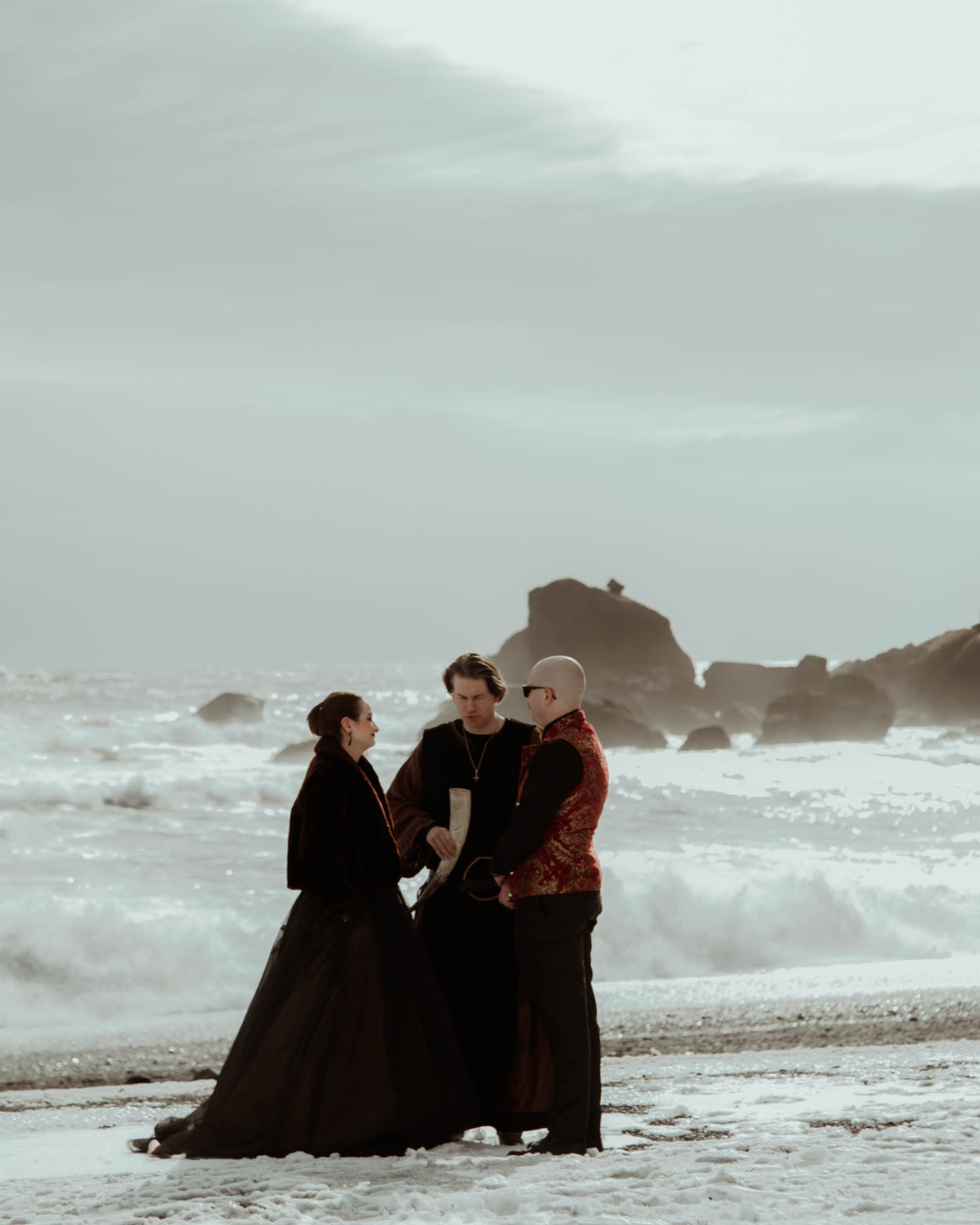
How to Get Legally Married in Iceland: Step by Step
Once you know the basic requirements, the process becomes much easier to understand.
Here's how I recommend approaching it when you're planning your wedding from abroad.
Step 1: Decide Whether You Want a Legal or Symbolic Ceremony
Before doing anything else, decide whether you want your marriage to become legally official in Iceland.
Some couples prefer to complete their legal marriage at home and have a symbolic ceremony in Iceland instead.
Others love the idea of making their marriage official during their Iceland adventure.
Both are valid choices, but the legal requirements are different.
A symbolic vow exchange does not create a legal marriage by itself.
If you're unsure which ceremony style fits your plans, you can read my guide to planning an Iceland elopement ceremony.
Step 2: Contact the District Commissioner About Your Documents
In Iceland, the District Commissioner (Sýslumaður) is responsible for examining whether a couple meets the legal conditions for marriage.
Before submitting your paperwork, contact the relevant office to confirm:
Which documents you both need.
Whether original or certified copies are required.
Whether translations or additional authentication are necessary.
How and where to submit your application.
The current processing time.
When your documents should be submitted relative to your wedding date.
If you're travelling to Iceland specifically to get married, I recommend doing this well before booking arrangements that cannot easily be changed.
Official information: Marriage in Iceland — Ísland.is
Step 3: Choose an Authorised Wedding Officiant
To get legally married in Iceland, your ceremony must be performed by someone authorised under Icelandic law.
Depending on the ceremony you want, this may be a District Commissioner or an appropriately authorised representative of a registered religious or life-stance organisation.
An officiant authorised to conduct weddings in your home country is not automatically authorised to perform a legally binding marriage in Iceland.
If you have a particular ceremony style in mind, confirm that the person you choose can legally perform the marriage here.
And don't forget to discuss the location.
An outdoor ceremony in the Icelandic Highlands is very different logistically from a civil ceremony at a District Commissioner's office.
Step 4: Prepare and Submit Your Marriage Application
Once you've confirmed the requirements, collect the necessary documents and follow the District Commissioner's instructions for submission.
Iceland has an electronic application process for eligible applicants with Icelandic identification and residency arrangements.
However, couples visiting from abroad may need to use the alternative application procedure provided by the authorities.
The official guidance explains how to submit the appropriate form and supporting documents if you cannot use the electronic system.
Don't assume that every foreign couple can complete the entire process through an online form.
And don't rely on one fixed deadline from a wedding blog.
The authorities state that documents must be submitted in advance and processing times can vary between offices.
Step 5: Receive Confirmation That You Can Legally Marry
Before the wedding can take place, the District Commissioner must examine whether there are any legal obstacles to the marriage.
Once the requirements have been met, a certificate of no impediment to marriage can be issued.
This certificate must be provided to the person conducting your wedding before the ceremony.
If you're arranging a civil marriage through the District Commissioner, the ceremony must take place within 30 days of the certificate being issued.
Make sure the timing works with your travel dates and ceremony arrangements.
Step 6: Have Your Wedding Ceremony in Iceland
Now for the part you've actually been dreaming about!
Once the legal requirements are in place and your authorised officiant is confirmed, you can have your wedding ceremony.
Maybe that's somewhere along Iceland's South Coast, surrounded by mountains or with a few of your favourite people beside you. Or perhaps you'd rather have a simple civil ceremony and spend the rest of the day exploring together.
Your ceremony location still needs to be practical, accessible and appropriate for the officiant and everyone attending.
Iceland's weather, road conditions and seasonal access can all affect the plan.
That's why I recommend organising the legal arrangements and the wedding-day experience together, rather than treating them as two completely separate decisions.
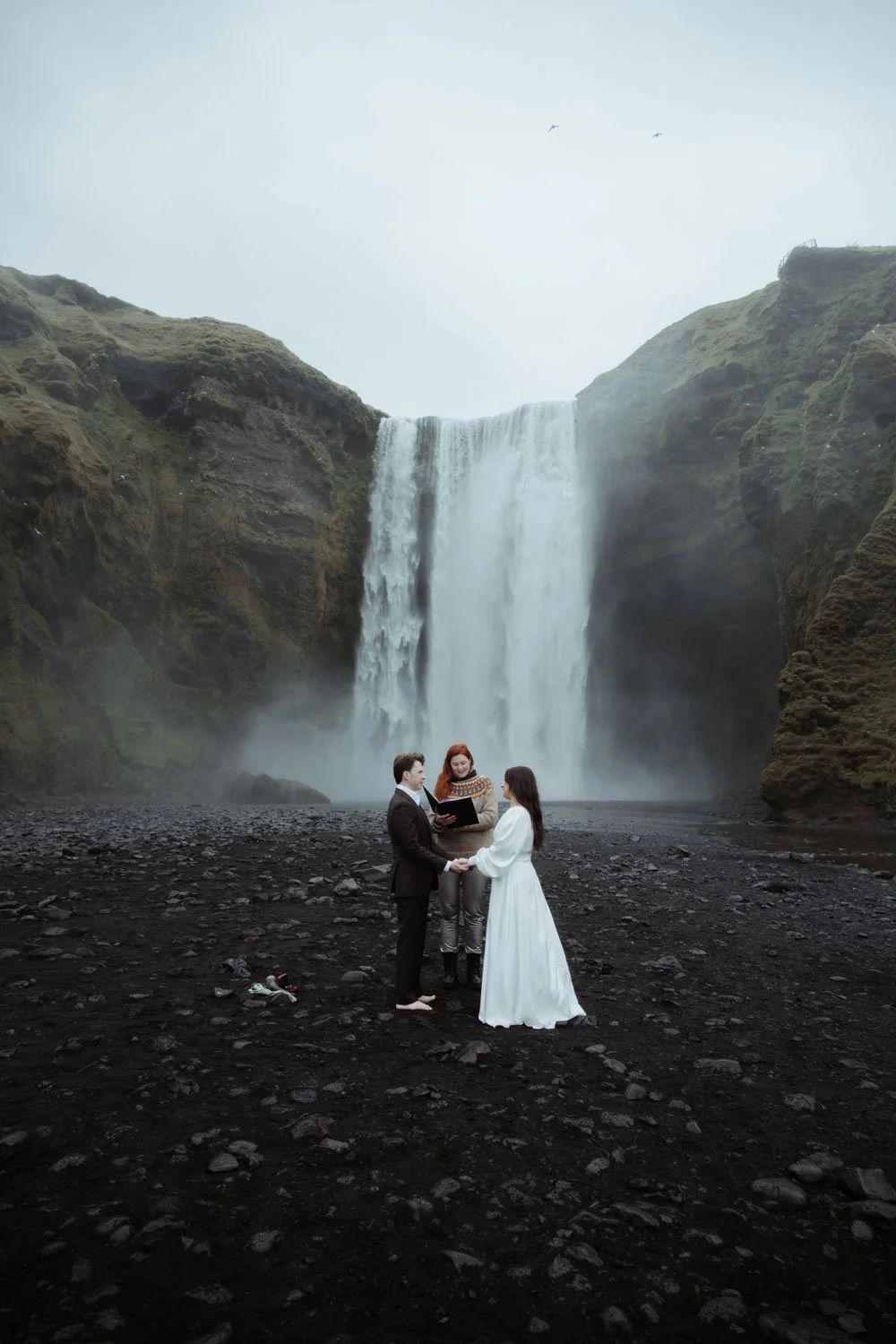
When Should You Submit Your Iceland Marriage Documents?
I recommend beginning your research several months before your wedding, particularly if you're travelling from outside Europe or need additional documents from your home country.
However, the actual submission date should follow the instructions from the District Commissioner.
There are two important timing considerations:
Your certificate of marital status: This must not be more than 12 weeks old when submitted.
Your application processing: The authorities require documents in advance, but processing times can vary.
For civil marriages conducted by the District Commissioner, the certificate of no impediment also has a specific validity window for the ceremony.
My advice is to contact the authorities early, establish your paperwork timeline and then request time-sensitive certificates at the appropriate point.
That way you're not scrambling for documents just before travelling to Iceland.
Who Can Legally Officiate a Wedding in Iceland?
Not every celebrant or person offering wedding ceremonies is legally authorised to marry couples in Iceland.
Generally, legally binding marriages may be conducted by:
District Commissioners or their authorised representatives for civil marriages.
Authorised representatives of registered religious organisations.
Authorised representatives of registered life-stance organisations.
If you're interested in an Ásatrú ceremony or another particular tradition, confirm the officiant's authorisation and availability directly.
The person conducting your ceremony also needs to agree to the location and practical arrangements.
For remote outdoor ceremonies, that might involve discussing travel time, safe access, weather alternatives and how much flexibility is possible.
Can You Get Legally Married Anywhere in Iceland?
Iceland offers some extraordinary settings for a wedding, but legally getting married here doesn't automatically mean you can choose any landscape.
For outdoor ceremonies, you'll need to consider the officiant's availability, land access, relevant permissions, safety and environmental restrictions.
Some places are easily accessible, while others require specialist guides or seasonal transport.
Waterfalls and Black Sand Beaches
Waterfalls and beaches can be beautiful settings, but strong wind, slippery surfaces, crowds and dangerous waves can make some areas unsuitable.
A location that's wonderful for portraits isn't necessarily appropriate for a ceremony.
The Icelandic Highlands
Highlands weddings can offer wonderful privacy, but access is seasonal, and some routes require suitable 4×4 transport.
If you're planning a remote ceremony, your officiant must be able and willing to travel there, and you need a realistic alternative if conditions change.
Glaciers and Ice Caves
Glacier environments require qualified local guides and careful safety planning.
Not every glacier or ice cave location is suitable for a wedding ceremony, and conditions can change quickly.
If this is the kind of adventure you're dreaming of, I recommend discussing the possibilities before committing to a particular ceremony location.
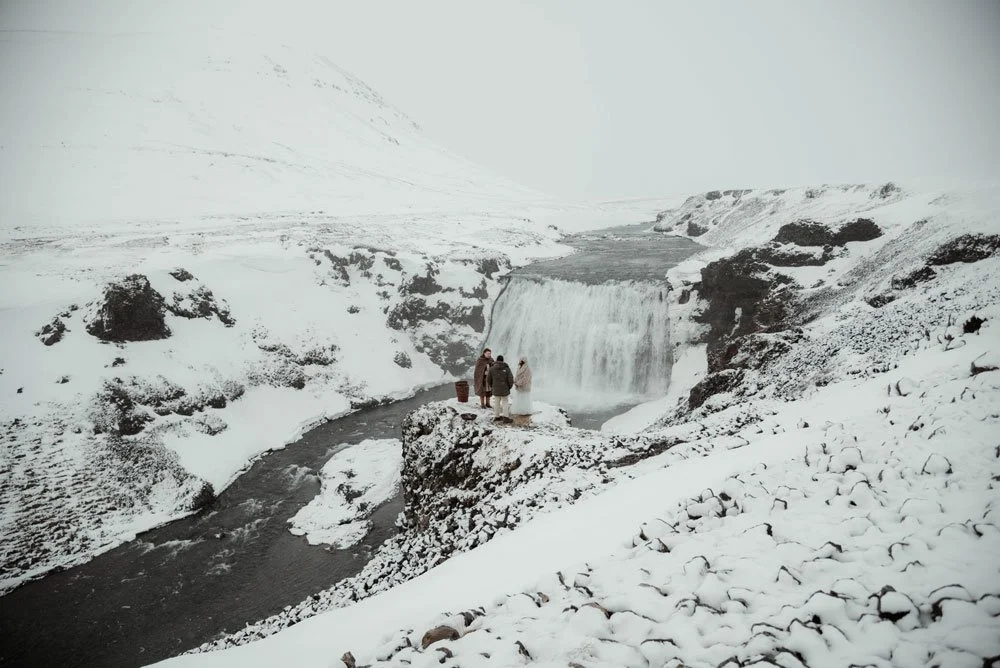
What Happens After You Get Married in Iceland?
After a legally binding ceremony, the marriage must be registered with the relevant Icelandic authorities.
For civil ceremonies conducted by a District Commissioner, the office sends notification of the marriage to Registers Iceland.
If you need an official marriage certificate for use in your home country, check how to obtain it and whether it requires additional authentication, such as an apostille.
Different countries have different rules for recognising and registering marriages performed abroad.
I recommend contacting the appropriate authority in your home country before travelling so you understand what documentation you'll need afterwards.
You don't want to discover after returning home that you needed an additional certified document.
Is It Easier to Get Legally Married at Home and Elope in Iceland?
For some couples, yes.
If the international paperwork feels complicated, or if you want a ceremony in a particularly remote location, getting legally married at home and having a symbolic elopement in Iceland can be a wonderful option.
You can still exchange vows, wear your wedding clothes, celebrate with loved ones and create an experience that feels like your wedding day.
The difference is that the symbolic ceremony doesn't complete the legal marriage.
For other couples, legally marrying in Iceland is an important part of the experience, and they're happy to organise the paperwork.
Neither option is more meaningful than the other.
It's about deciding what works for your relationship, your travel plans and the experience you want.
Frequently Asked Questions About Iceland Marriage Requirements
Do you need to be an Icelandic resident to get married in Iceland?
No. Foreign couples can legally marry in Iceland without being permanent residents, provided they meet the legal requirements and submit the necessary documents.
Can two foreigners get married in Iceland?
Yes. Both partners can be foreign citizens.
The required documents may depend on their countries of residence and individual circumstances.
Can same-sex couples legally marry in Iceland?
Yes. Same-sex marriage has been legal in Iceland since 2010.
Do you need witnesses to get married in Iceland?
The Marriage Notification process requires certification by two witnesses, but the official guidance says those witnesses do not need to attend the ceremony.
Ask your officiant whether any additional arrangements apply to your particular ceremony.
Do you need a visa to get married in Iceland?
Your entry requirements depend on your nationality and travel circumstances.
Getting married in Iceland doesn't automatically remove any visa or immigration requirements.
Check Iceland's official immigration guidance before booking travel.
How much does it cost to get legally married in Iceland?
Costs depend on the type of ceremony, the officiant and the arrangements involved.
The official application and civil ceremony processes have government fees, which may change.
An outdoor ceremony may also involve travel, accommodation or additional services.
Confirm current fees directly with the authorities and your officiant rather than relying on an older published price.
Can an American couple legally get married in Iceland?
Yes, provided both partners meet Iceland's marriage requirements and supply the necessary documentation.
The same principle applies to couples from many other countries, although the exact documents and travel requirements can vary.
Is an Icelandic marriage recognised in other countries?
A marriage legally performed in Iceland may be recognised abroad, but recognition, registration and document authentication requirements depend on the country concerned.
Confirm the requirements with the appropriate authority in your home country.
Can we have a private ceremony with no guests?
Yes. You can arrange an intimate ceremony without inviting family or friends.
If you want it to be legally binding, you'll still need an authorised officiant and the required legal formalities.

Planning the Wedding Experience Around Your Legal Ceremony
Here's where my part of the planning comes in.
Getting your marriage documents approved is one part of planning a wedding in Iceland.
The other part is creating a day you actually want to experience.
When couples come to me, they don't always know exactly where they want to get married. Sometimes they know they want privacy. Sometimes they're dreaming of a waterfall, a glacier or a remote mountain landscape. And sometimes they simply know they don't want their wedding day to feel like a performance.
We start with how you want the experience to feel, and then work through the practical decisions together.
I'll help you explore suitable ceremony locations, think through the timeline, find relevant local vendors and plan around the realities of Iceland's weather and access.
If you're having a legal ceremony, we'll also make sure the photography and experience plan works around your officiant's arrangements.
I can help you understand which questions to ask and recommend relevant local professionals, but the District Commissioner and your authorised officiant remain responsible for confirming the legal requirements.
My goal is for you to arrive knowing that the important decisions have been considered, with enough flexibility to enjoy the day rather than worry about every detail.
Ready to Get Married in Iceland?
You don't need to become an expert on Iceland to plan a meaningful wedding here.
You do need to understand the legal requirements, organise the paperwork and choose a ceremony plan that works for the season, location and people involved.
And once those practical things are taken care of, there's so much room to make the experience your own.
Whether you're imagining an intimate legal ceremony, a private symbolic vow exchange or a wedding adventure with your closest people, I'd love to hear what you're dreaming of.
Explore My Iceland Elopement Experiences
Get in Touch to Start Planning
Official Resources for Getting Married in Iceland
For the most accurate and current legal information, refer directly to Iceland's official authorities:
This guide provides general planning information and is not legal advice. Marriage requirements, fees and administrative procedures may change. Always confirm the current requirements with the relevant Icelandic authorities and your officiant before submitting documents or making final arrangements.
