How to Access Remote Elopement Locations in Iceland Safely
Accessing remote elopement locations in Iceland safely requires understanding F-roads, 4x4 vehicle requirements, river crossings, and when professional guides or helicopter access are necessary. Iceland’s most private landscapes are often far from paved roads, and reaching them safely depends on preparation, timing, and the right access strategy. This guide explains how couples safely reach remote elopement locations using proven safety planning logic. Understanding these factors helps couples experience Iceland’s most isolated environments while protecting their safety, reducing risk, and ensuring their elopement day remains calm, intentional, and fully focused on the experience.

Why Remote Locations Require a Different Kind of Planning
One of the reasons couples choose Iceland for their elopement is the sense of isolation.
The feeling of standing somewhere vast and untouched. Somewhere that feels completely removed from the outside world.
But that isolation exists for a reason.
Many of Iceland’s most private landscapes are difficult to reach. Not because they are hidden, but because access requires preparation.
The further you move away from paved roads, the more the environment begins to operate on its own terms.
Road conditions change. Terrain becomes unpredictable. Access points require awareness and experience.
This doesn’t make remote elopements unsafe.
It simply means access must be intentional.
Safety in Iceland is not about avoiding remote places. It’s about understanding how to access them properly.
Understanding F-Roads: Iceland’s Mountain Access Routes
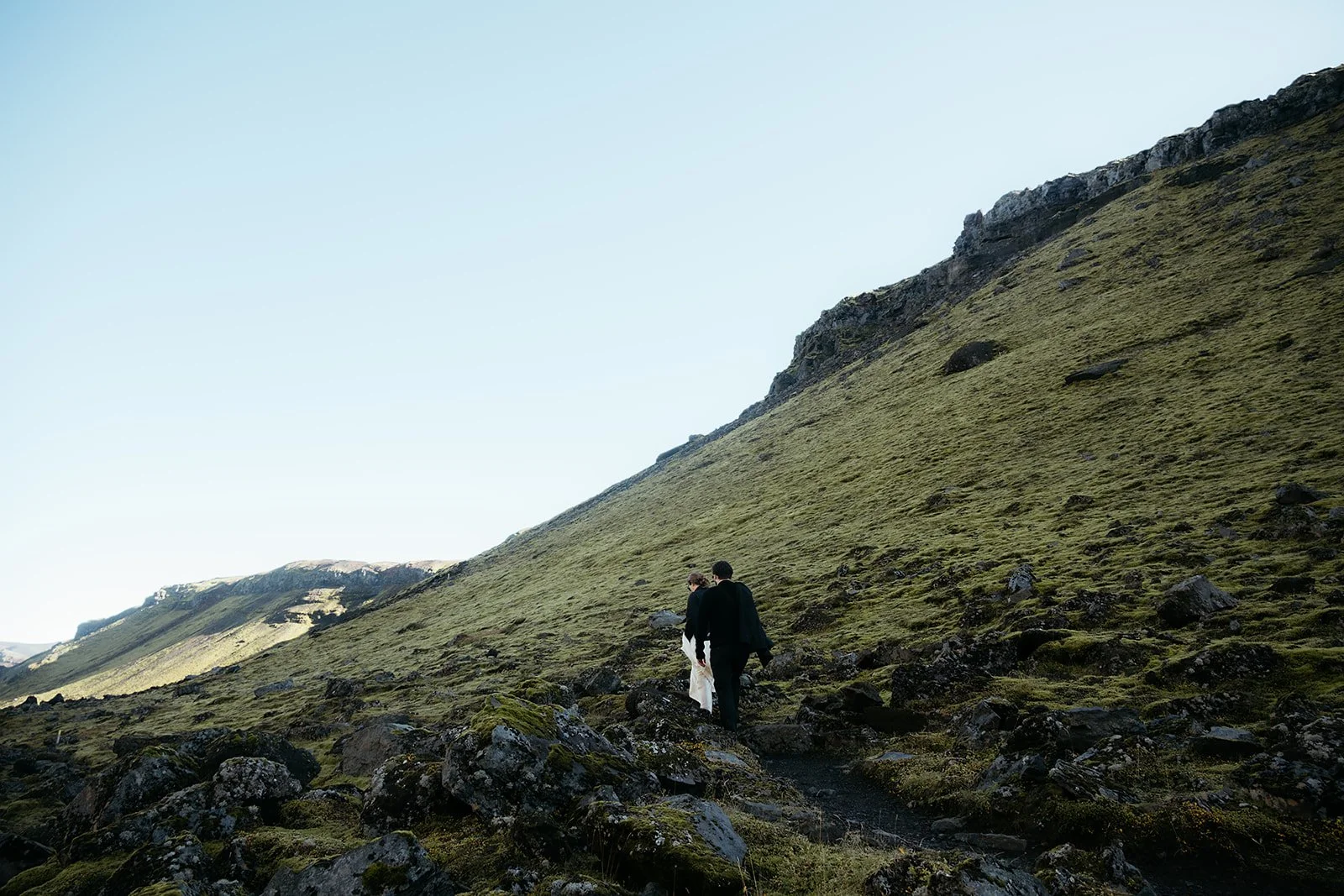
F-roads, or “Fjallvegur” roads, are mountain roads that lead into Iceland’s interior and more remote regions.
These roads are very different from standard paved roads.
They are unpaved. Often rough. Sometimes narrow. And they exist in environments where conditions can change quickly.
F-roads are marked with an “F” before the road number, and this designation exists for one primary reason:
They require 4x4 vehicles.
Not optional. Required.
This requirement isn’t based on difficulty alone. It’s based on safety.
F-roads often include uneven terrain, loose surfaces, steep inclines, and natural obstacles that standard vehicles are not designed to handle.
Driving these roads safely requires both the right vehicle and the right awareness.
They are a gateway to some of Iceland’s most private landscapes — but they demand respect.
Why 4x4 Vehicles Are Essential — Not Just Recommended
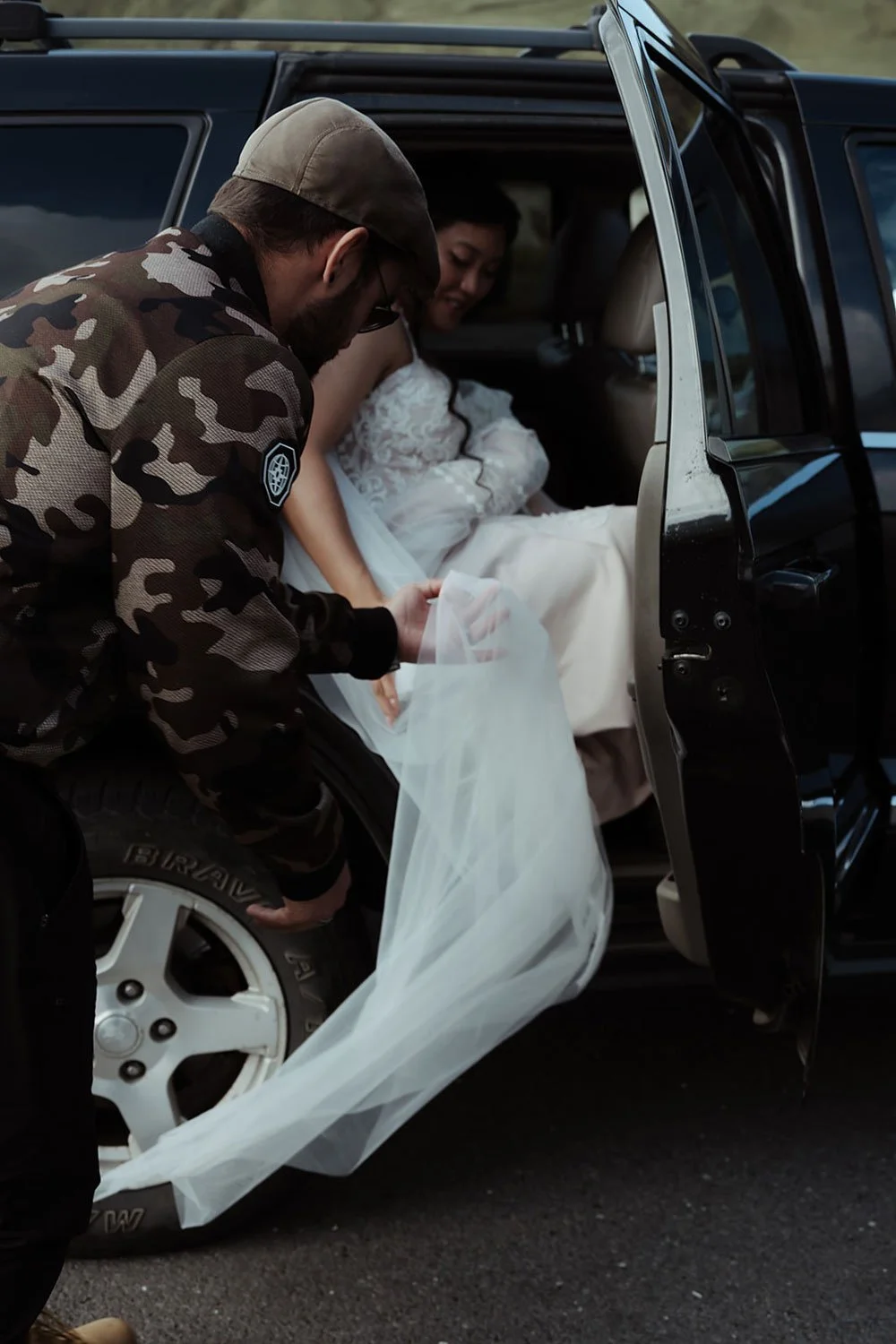
A true 4x4 vehicle provides stability, traction, and clearance that standard vehicles cannot.
This becomes critical when driving on uneven terrain or loose surfaces.
Ground clearance allows the vehicle to pass safely over rough sections of road without damaging the underside.
Four-wheel drive allows the vehicle to maintain traction when surfaces become unstable.
Without these capabilities, vehicles are more vulnerable to becoming stuck or damaged.
But having a 4x4 vehicle is only part of the equation.
Knowing when and how to use it safely is equally important.
Because remote access is not just about capability.
It’s about judgment.
River Crossings: The Most Misunderstood Part of Remote Access
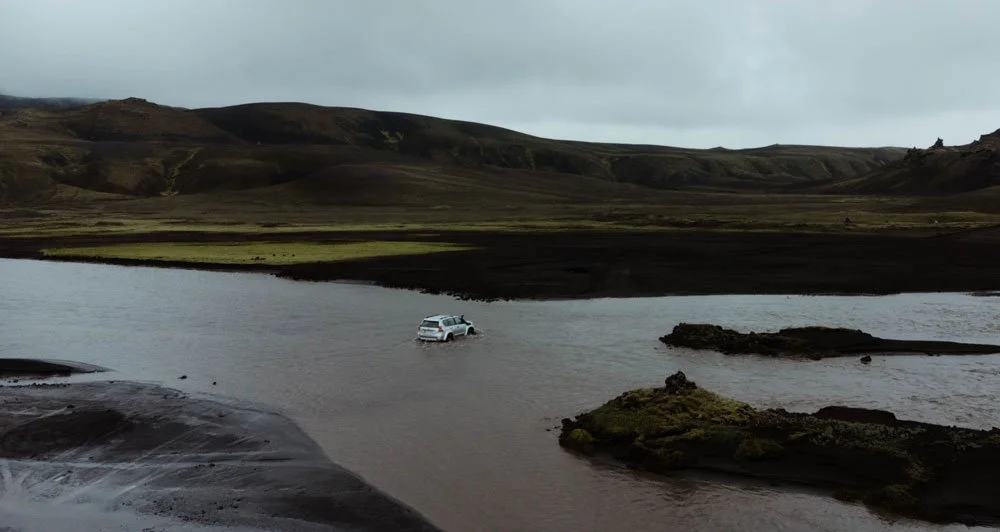
Many F-roads include river crossings.
These are not bridges.
They are natural riverbeds that vehicles drive through.
River crossings vary dramatically. Some are shallow and slow-moving. Others change depth depending on weather, temperature, and glacial melt.
Water levels can rise throughout the day.
A crossing that feels manageable in the morning may become unsafe later.
This unpredictability is why river crossings require careful evaluation.
Safe crossings depend on understanding water depth, current strength, and vehicle capability.
This is not about taking risks.
It’s about knowing when to cross — and when not to.
In many cases, professional drivers or guides are used specifically because they understand these variables.
Safety is not about forcing access.
It’s about choosing access wisely.
Why Professional Guides and Drivers Are Sometimes Necessary
Some remote areas require more than just a capable vehicle.
They require local knowledge.
Guides understand terrain patterns, seasonal access limitations, and safe travel timing.
They know which routes are stable and which should be avoided.
They understand how environmental conditions affect access.
This knowledge removes uncertainty.
It allows couples to focus on the experience itself, rather than worrying about navigation or safety decisions.
Working with experienced professionals transforms remote access from something stressful into something seamless.
Not because the environment becomes less powerful.
But because access becomes intentional.
Helicopter Access: The Fastest Way to Reach the Most Isolated Locations
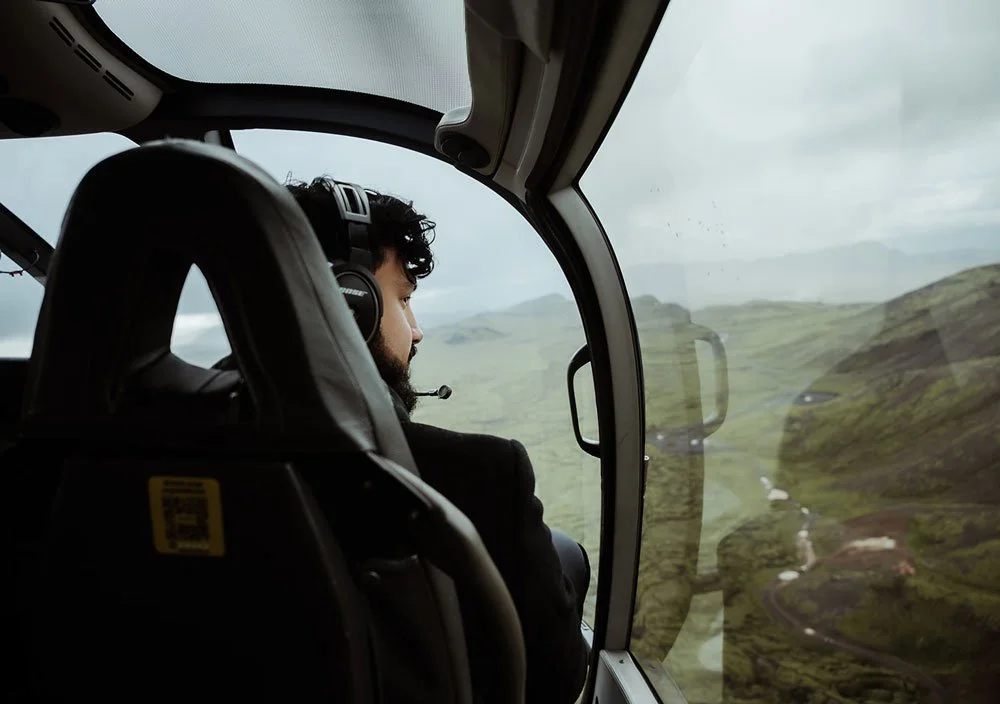
Some of Iceland’s most remote elopement environments cannot be accessed safely by vehicle at all.
Helicopter access provides a completely different approach.
Instead of navigating terrain, couples are transported directly.
This eliminates many of the uncertainties associated with ground travel.
No river crossings. No unstable roads. No access limitations based on terrain.
Helicopter access allows couples to reach places that would otherwise require extensive travel or specialized driving experience.
It also minimizes physical and mental fatigue.
Instead of focusing on the journey itself, couples arrive calm, present, and ready to experience the environment fully.
Helicopter access is not about luxury.
It’s about precision, safety, and access.
Safety Planning Is About Removing Uncertainty
The purpose of safety planning is not to limit access.
It’s to create clarity.
When access is planned properly, uncertainty disappears.
Couples know how they will arrive. What to expect. And how to move through the environment safely.
This creates emotional freedom.
Instead of feeling cautious or unsure, couples feel grounded.
Present.
Able to fully experience their elopement.
Safety planning protects the emotional experience by removing unnecessary stress.
It creates stability in an environment that is naturally unpredictable.
Safe Access Protects the Experience Itself
Safety is not separate from the elopement experience.
It protects it.
It ensures the day unfolds calmly. Predictably. Intentionally.
Without unnecessary stress or distraction.
Couples can focus on each other.
On the environment.
On the meaning of the day.
Because when access is handled properly, everything else becomes simpler.
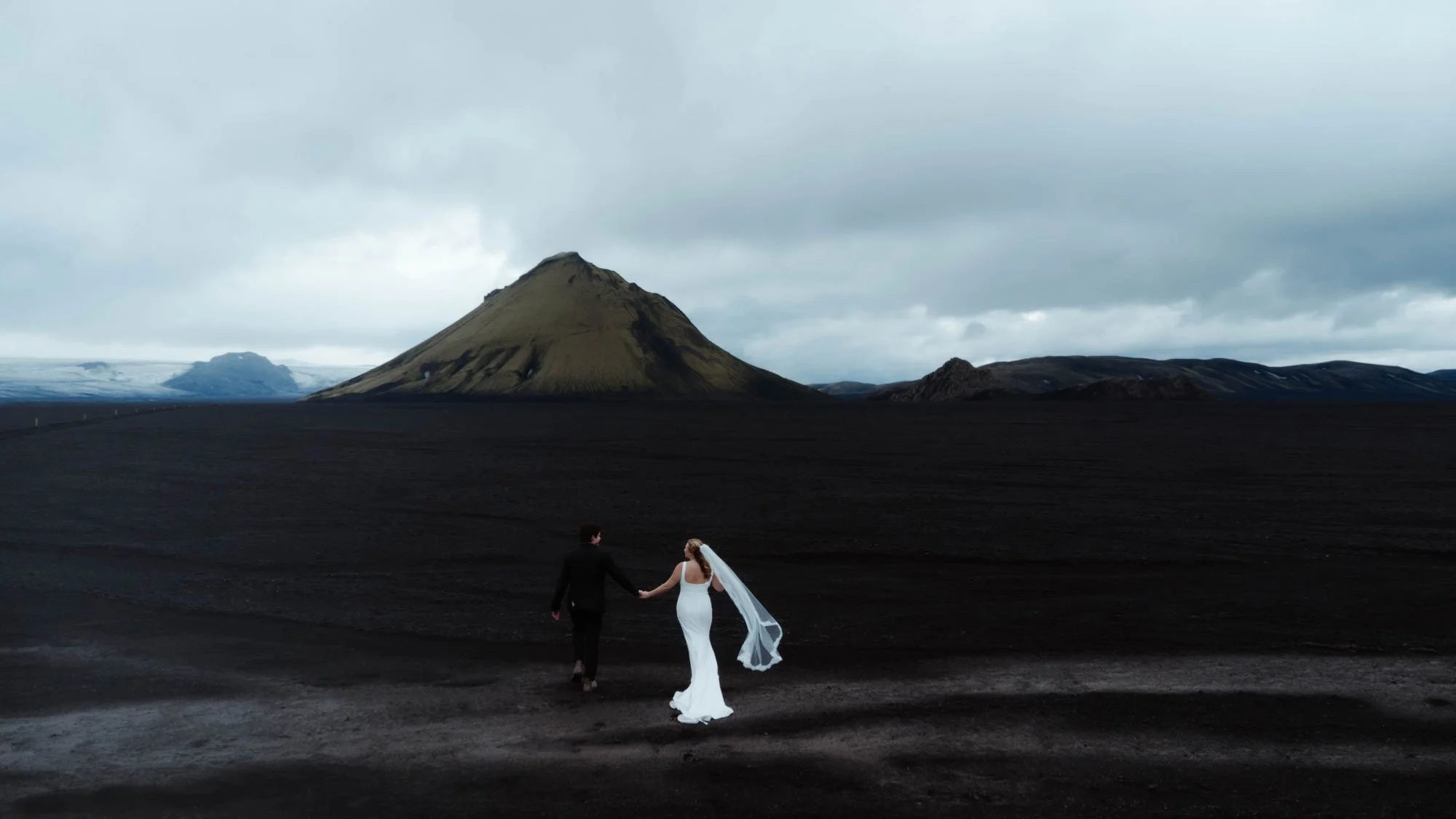
Remote Locations Are Meant to Be Experienced With Care
Iceland’s most isolated landscapes remain powerful because access requires intention.
Not everyone reaches them.
And that’s part of what preserves their stillness.
But with proper planning, the right access strategy, and respect for the environment, these places become safely accessible.
Not through luck.
Through preparation.
And when couples reach these environments safely, they experience Iceland at its most quiet, most vast, and most personal.
Why Remote Elopements Feel So Different
When couples reach remote environments safely, something shifts.
The absence of roads, buildings, and people creates a deeper sense of presence.
The environment feels larger.
Time feels slower.
The experience becomes less about travel and more about connection.
This is why remote elopements feel so powerful.
Not because they are difficult to reach.
But because the journey itself creates separation from everything familiar.
Safety planning makes this possible.
It transforms remote access from something uncertain into something intentional.


Read more on how to plan your Iceland elopement:
Planning an elopement in Iceland can feel overwhelming at first — but it doesn’t have to be.
If you’re dreaming about eloping here and want guidance on timing, locations, and how the experience actually works, reach out anytime. I’m always happy to help you explore what’s possible.
Getting your Iceland elopement started:
Iceland rewards couples who plan with intention — not perfection.
If you're dreaming about eloping here, I’d love to help you build an experience that feels effortless, private, and unforgettable.
You can check availability and start planning your Iceland elopement here.
Or explore Iceland elopement packages to learn more about how the experience works.
